About the Project

What If Robots Could Help Us Write A New Narrative Of Aging And Culture?

Our goal is not to replace human relationships.
We want to explore how technology can bring people closer together.
We also hope to encourage more positive ways of thinking about aging and cultural diversity.

But, first what is a Social Robot?

A social robot is a machine designed to communicate and interact with people in ways that support everyday activities and well-being.

Societies are becoming increasingly multicultural and technology is becoming more present in our lives. So, we need to question whose experiences and values are represented in its development.

Our Vision

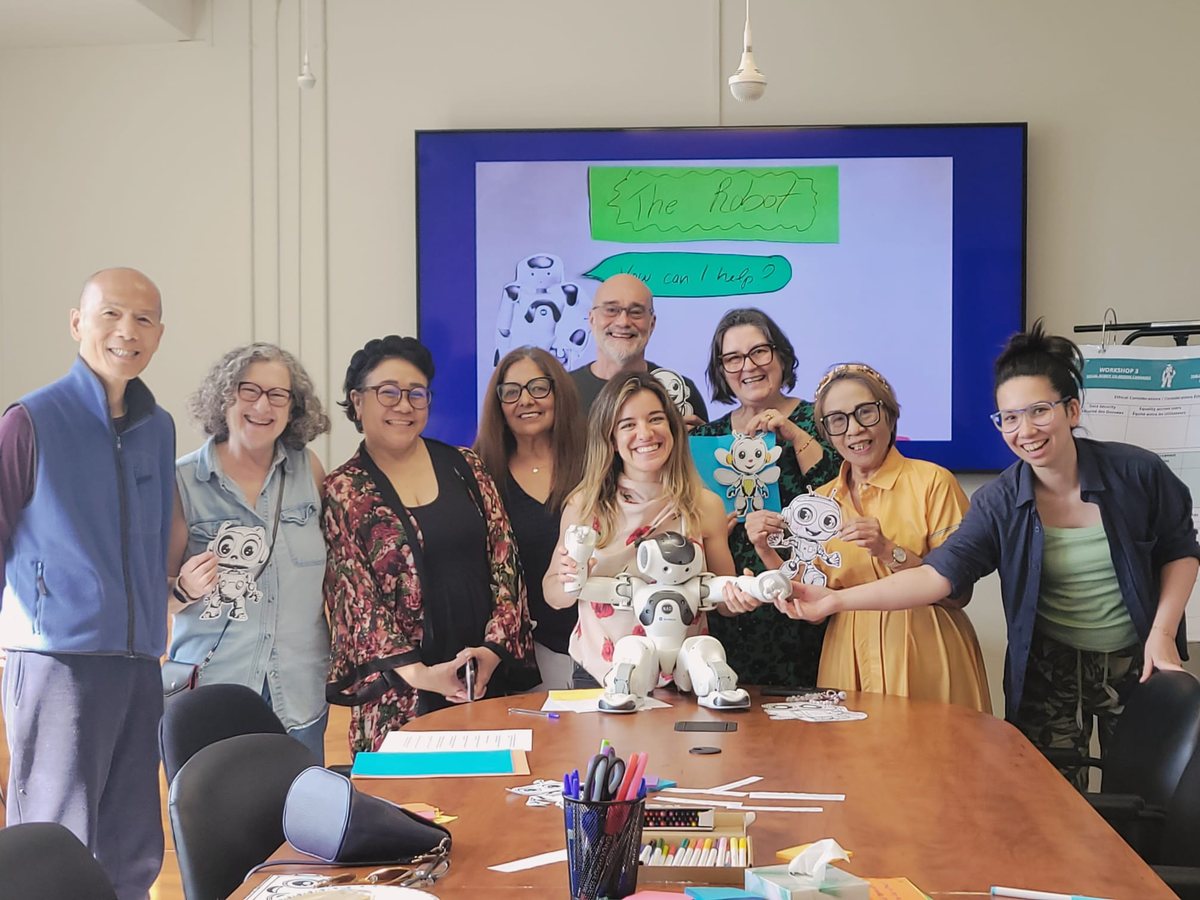
Workshop participants holding their robot drawings around a table

H·age starts from a simple idea: all older adults deserve a seat at the table when designing technologies that may affect their lives.

Did you know that much of today's technology is designed without the people it is meant to serve? Social robots are a particularly good example of this. Most research has involved people from Western, Educated, Industrialized, Rich, and Democratic (WEIRD) countries.

But what if a robot could actually help an older immigrant communicate in their language, navigate a new country, or stay connected to their cultural roots? Sometimes, something as simple as sharing a joke in their mother tongue can make a difference!

Our Research Journey

From imagining a robot to interacting with one over 6 weeks

Study 1 | Listening and co-designing

(2025–2026)

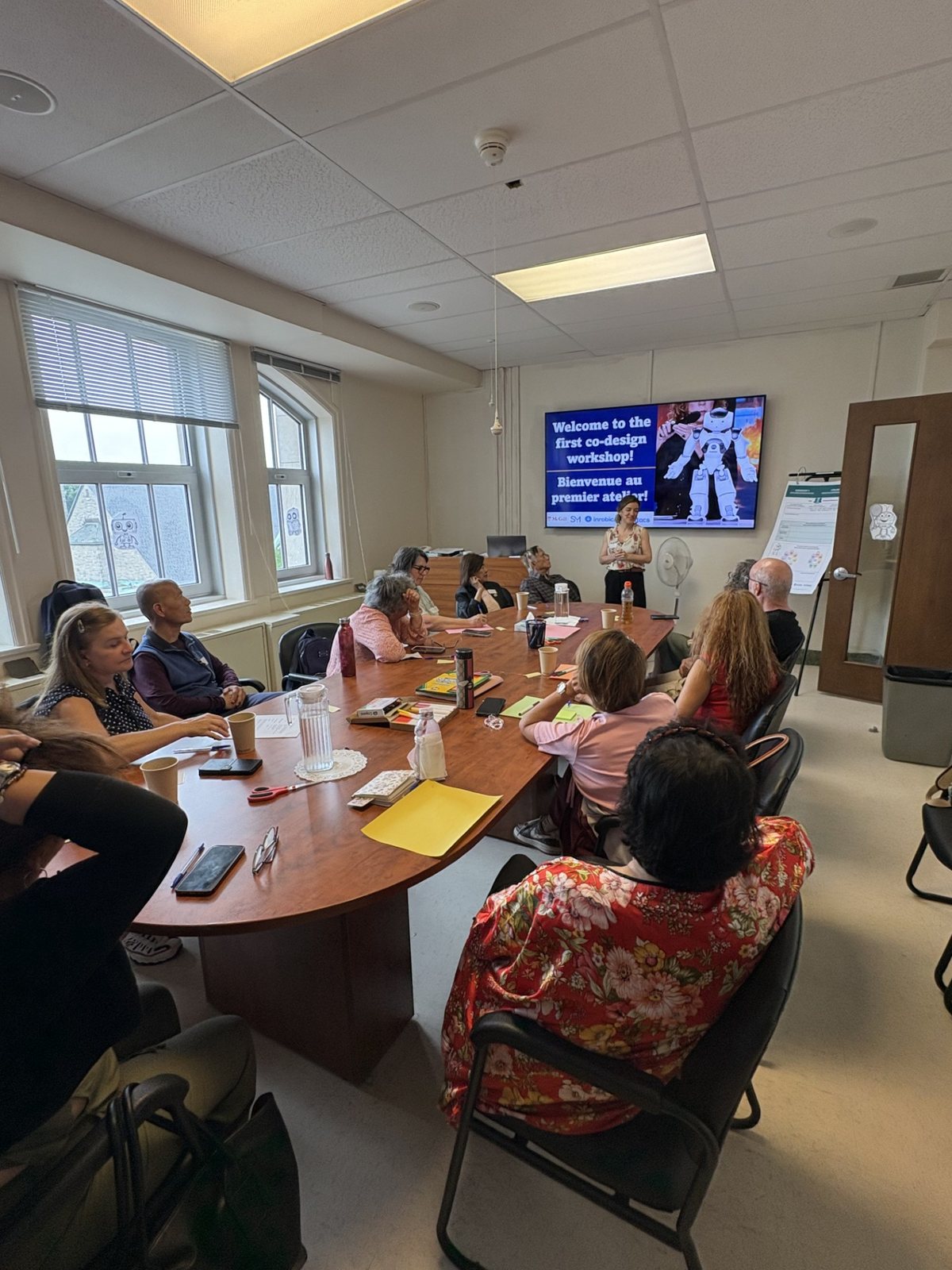
Participants at the first co-design workshop

What would a social robot look like if older immigrants helped design it?

We began by inviting 12 older immigrants living in Montreal to participate in three arts-based co-design workshops. Through storytelling, drawing, and robot interactions, participants explored how social robots might fit into their daily lives.

Participants recognized the potential for cultural continuity and well-being but also highlighted the importance of privacy, autonomy, and respect for cultural identities. Their contributions resulted in 35 user requirements for a culturally responsive social robot.

Study 2 | From co-design to experience

(2026–2028)

Can a culturally responsive social robotic intervention be feasible, potentially improve mental health and create meaningful experiences in community settings?

The next phase involves 20 older immigrants in a six-week community-based social robotic program.

Participants will explore group and individual activities with the social robot, including conversations, music, storytelling, and cognitive games.

Most importantly, participants will continue to inform how the technology should evolve.

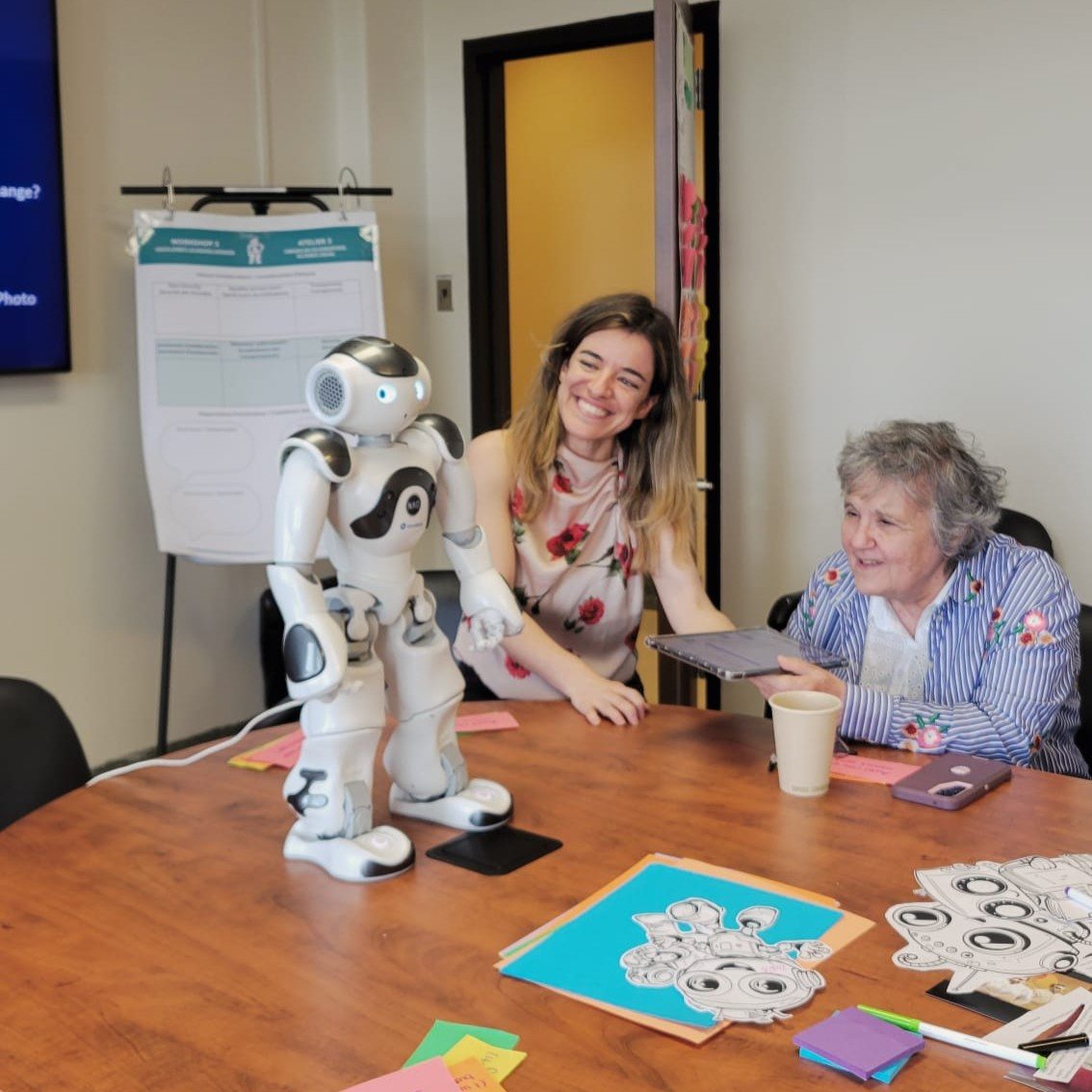
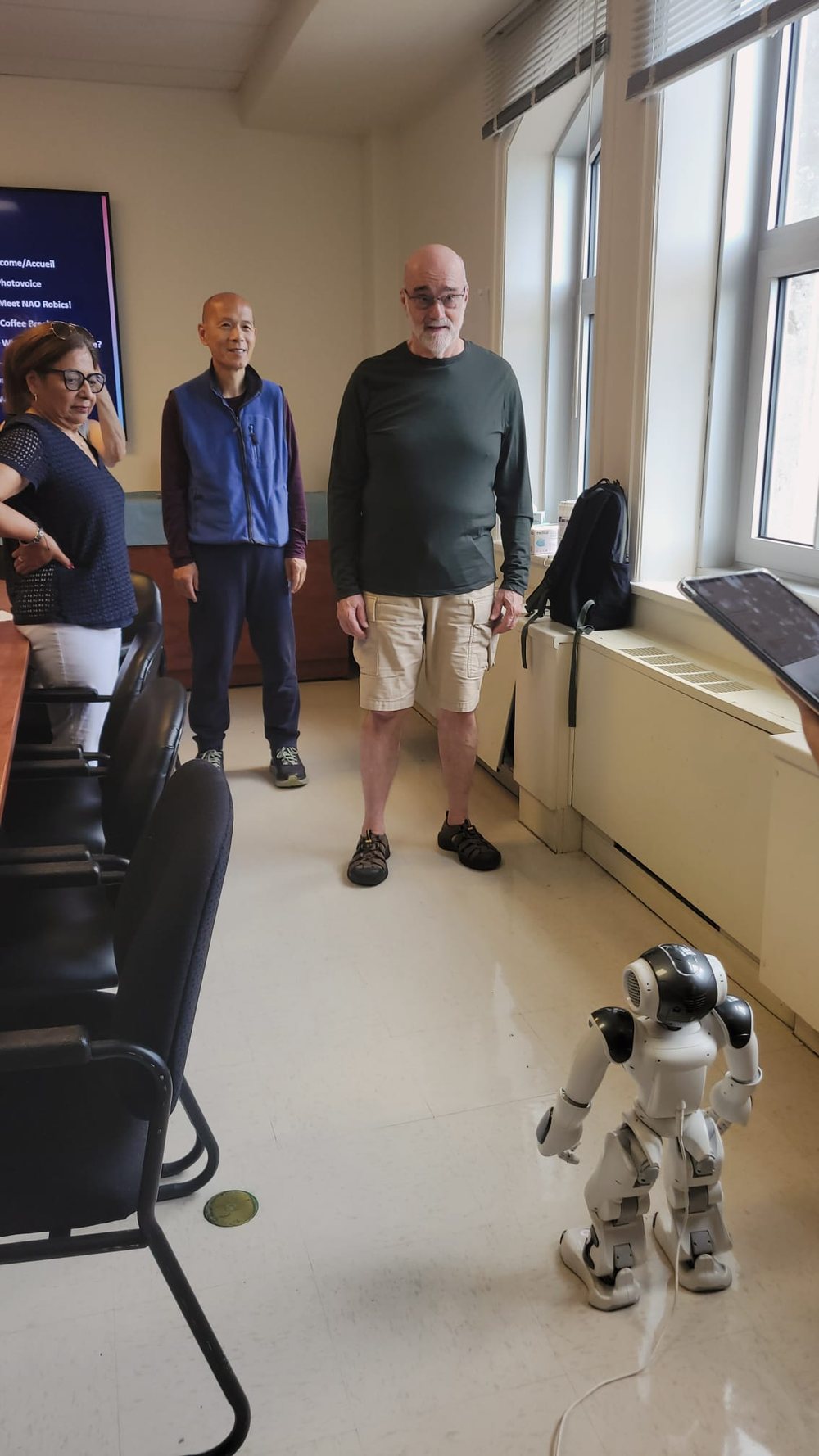
Two participants walking with a small social robot

Team Members

H-AGE belongs to each and every participant in this project. Because without them nothing would be possible!

Sofia Santos Nunes

PhD Student in Mental Health @ McGill University
Sofia Santos Nunes
Know moreShow less

Sofia Santos Nunes is a PhD student in Mental Health at McGill University's Department of Psychiatry.

She holds a Master's degree in Clinical Psychology from the University of Lisbon and has nearly a decade of experience working on European and community-based projects related to aging, mental health, social inclusion, and technological innovation.

Before joining McGill, Sofia worked with organizations including AGE Platform Europe and Social Services Europe, contributing to research, advocacy, and policy initiatives focused on the rights and well-being of older adults.

Sofia is also an EPIC-AT Fellow and Editor-in-Chief of McGill Perspectives on Global Health. What motivated her to pursue this work was the fact that she loves to hear stories from older people around the world!

Dr. Vincent Paquin

Principal Investigator / Supervisor @ McGill University

Dr. Vincent Paquin
Know moreShow less

Dr. Paquin's research aims to understand how digital media practices influence the mental health of adolescents and young adults and to support the adaptation of psychosocial services and policies to their digital culture.

His work combines qualitative and quantitative methods, drawing on theories and concepts from cultural psychiatry, media psychology, and communication. He received his PhD from Maastricht University with a focus on digital technology use, psychosis and trust.

He has an MSc from McGill University where he also completed his clinical training in psychiatry, and an MD from Université Laval. He is based at the Jewish General Hospital where he provides outpatient care in the Culturally Focused First Episode of Psychosis Program.

Outside of work, he enjoys reading science-fiction, playing video games, and strolling around the city.

Dr. Melissa Park

Co-supervisor @ McGill University

Dr. Melissa Park
Know moreShow less

Melissa Park, Ph.D., is an Associate Professor in the School of Physical and Occupational Therapy, and affiliate member of the Institute of Health Science Education, Faculty of Medicine and Health Sciences and Culture and Mental Health Research Unit, Division of Social and Transcultural Psychiatry at McGill University.

She is also an affiliate Associate Professor in Design and Computation Arts, Department of Fine Arts at Concordia University and a Researcher at the Lady Davis Institute and the Centre de recherche interdisciplinaire en réadaptation du Montréal métropolitain. As an occupational therapist with a background in History of Art, Occupational Science, and Medical Anthropology, she has extensive clinical, research and pedagogical experience using the terms of humanities and rehabilitation to understand healing, transformative and relational processes at dyadic, systemic and sociocultural levels from first-person or experience-near perspectives using narrative-phenomenological and aesthetic conceptual frameworks.

Local Ethical Advisory Council

The Local Ethical Advisory Council brings together older immigrants with lived experiences relevant to the research. Members help ensure that the project respects participants' cultural backgrounds, values, and needs. They provide feedback on research activities, communication materials, and ethical considerations, helping make the research more inclusive, accessible, and meaningful to the communities involved.

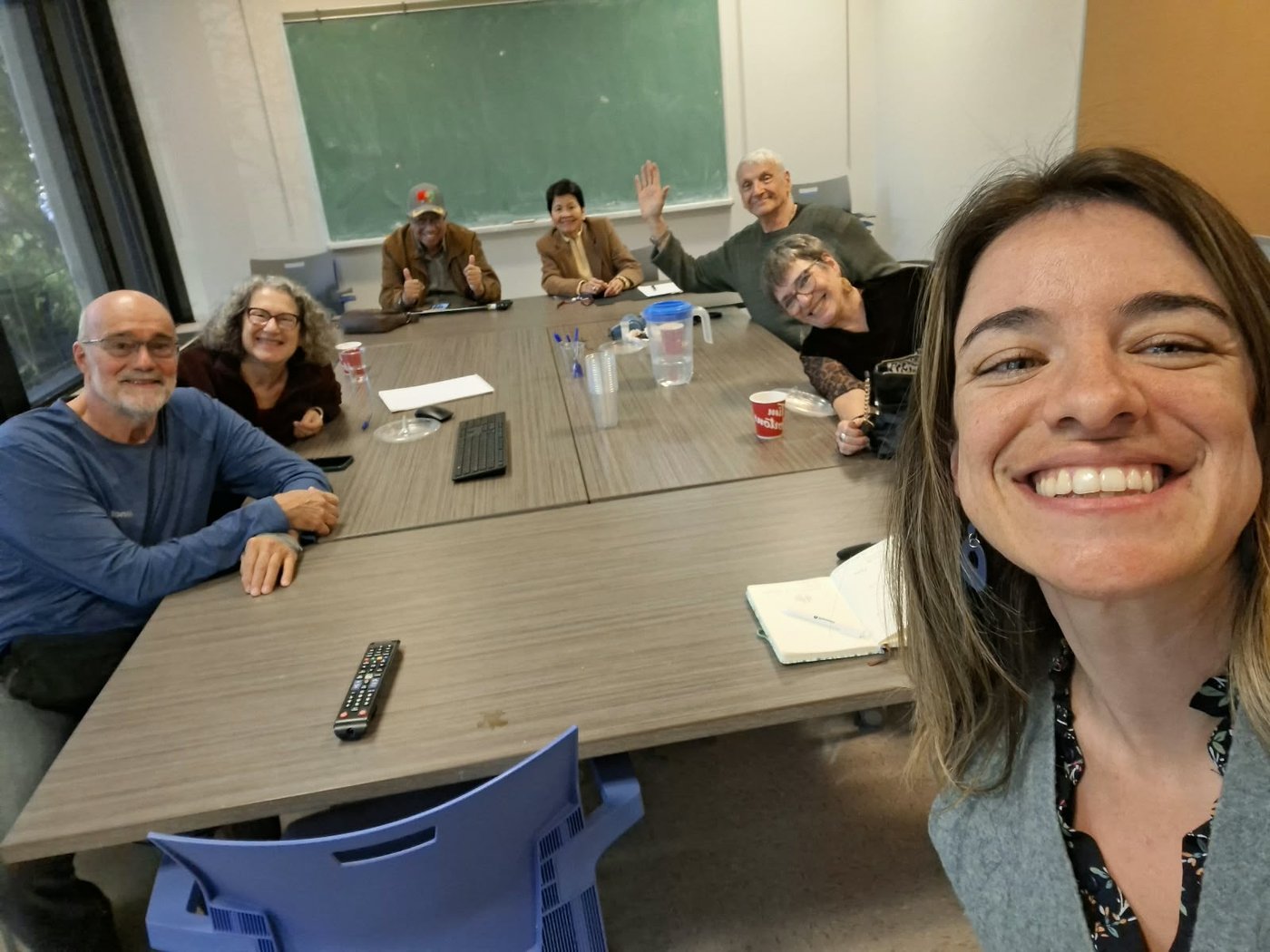
Sofia with members of the Local Ethical Advisory Council around a meeting table

Thesis Advisory Committee

The Thesis Advisory Committee brings together researchers from different disciplines who provide scientific guidance throughout the PhD project. Members offer feedback on the research design, methods, and findings, help address challenges, and support the project's academic development and progress.

Dr. Julienne Greer

Roboticist and Associate Professor @UC San Diego

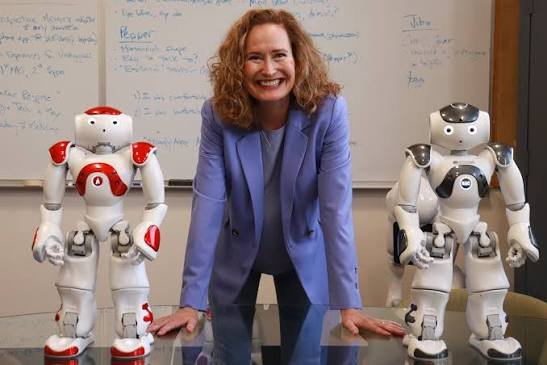
Dr. Julienne Greer with two NAO robots
Know moreShow less

Julienne A. Greer is an interdisciplinary scholar, artist, and Associate Professor at UC San Diego.

Before, Dr. Greer was an Associate Professor of Social Robotics and Performance at the University of Texas at Arlington, where she directed the Emotional Robotics Living Laboratory.

With a background in theatre, media arts, and humanities, her research explores how performance techniques can make interactions between humans and robots more natural, empathetic, and meaningful. Her work focuses on human–robot interaction, emotional connection, and the role of social robots in supporting human well-being.

She holds a PhD in Humanities, an MFA in Media Arts, and a BFA in Drama.

Dr. Jeffrey T.K. Valino Koh

Head, Design Factory @ Singapore Institute of Technology

Dr. Jeffrey T.K. Valino Koh
Know moreShow less

Jeffrey is a transdisciplinary designer, artist, and researcher with extensive international experience across design, technology, and the arts. He has collaborated with organizations such as PRADA, KesselsKramer, and the Office for Metropolitan Architecture, and exhibited his work internationally.

He holds a PhD from the National University of Singapore and an MA from Central Saint Martins, London. His research explores human-computer and human-robot interaction, cultural robotics, and experimental creative practices.

Currently, Jeffrey is an Associate Professor at the Singapore Institute of Technology (SIT), focusing on cultural robotics, regenerative design, and the circular economy.

Dr. Vincent Laliberté

Assistant Professor @McGill University

Dr. Vincent Laliberté
Know moreShow less

Dr. Vincent Laliberté is a psychiatrist at the Jewish General Hospital and Principal Investigator at the Lady Davis Institute for Medical Research in Montreal. He also directs the PRISM program at Welcome Hall Mission.

His research focuses on homelessness, mental health, and the social factors that influence well-being. Drawing on medical anthropology, mixed methods, and arts-based research, he explores how social and cultural experiences shape mental health and healthcare.

Currently, Dr. Laliberté is an Assistant Professor of Psychiatry at McGill University.

McGill University Mitacs Inrobics Social Robotics